




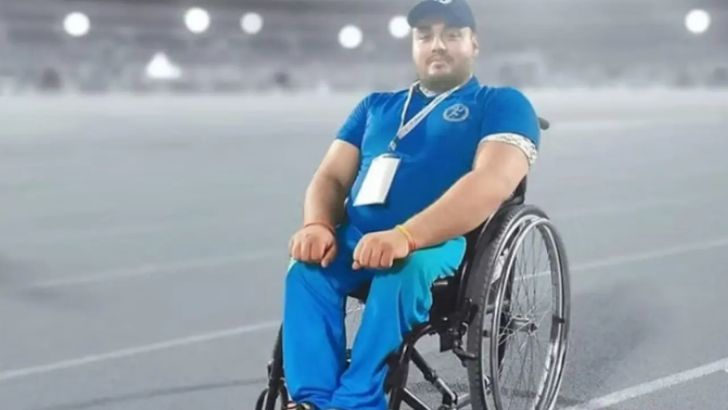
Para javelin thrower Anmol Vasistha banned for three years over steroid positive
Anmol Vasistha tested positive for a prohibited anabolic steroid in an in-competition sample collected during the men’s javelin throw F55 event on March 11.
PTI
-
Vasistha accepted the anti-doping rule violation and the consequences proposed by the IPC, the body said in a statement (X)
New Delhi, 17 October
The International Paralympic Committee (IPC) has banned India's Anmol Vasistha for three years after he tested positive for a prohibited anabolic steroid during the New Delhi World Para Athletics Grand Prix in March this year.
Vasistha returned an adverse analytical finding for a metabolite of dehydrochloromethyl-testosterone (DHCMT) in an in-competition urine sample collected on March 11 during the men's javelin throw F55 event, the IPC said in a statement.
DHCMT is an anabolic androgenic steroid included in the World Anti-Doping Agency's 2026 Prohibited List.
The Indian athlete was provisionally suspended on April 24 pending the resolution of his case. He subsequently accepted the anti-doping rule violation (ADRV) and the consequences proposed by the IPC.
His three-year period of ineligibility runs from April 24, 2026, to April 23, 2029. During this period, he will be barred from all competitions and other sporting activities, except authorised anti-doping education or rehabilitation programmes.
The IPC said Vasistha's results in the men's javelin throw F55 event at the New Delhi Grand Prix had been automatically disqualified, along with all other results he secured at the competition. He will forfeit any medals, points and prizes earned.
"The results obtained by the athlete in the men’s javelin throw F55 competition at the New Delhi 2026 World Para Athletics Grand Prix are automatically disqualified, with all resulting consequences, including forfeiture of any medals, points and prizes.
"All other results obtained by the athlete in the New Delhi 2026 World Para Athletics Grand Prix are also disqualified, with all of the resulting consequences, including forfeiture of any medals, points and prizes," said the IPC.
The IPC reiterated that athletes are strictly liable for prohibited substances found in their samples, irrespective of whether their use was intentional or unintentional, or whether negligence or fault was involved.
As a signatory to the World Anti-Doping Code, the IPC said it remained committed to maintaining a doping-free sporting environment for athletes
Share Now

Leave a Reply
Your email address will not be published. Required fields are marked *
Other Stories
.jpg)






.png)
